
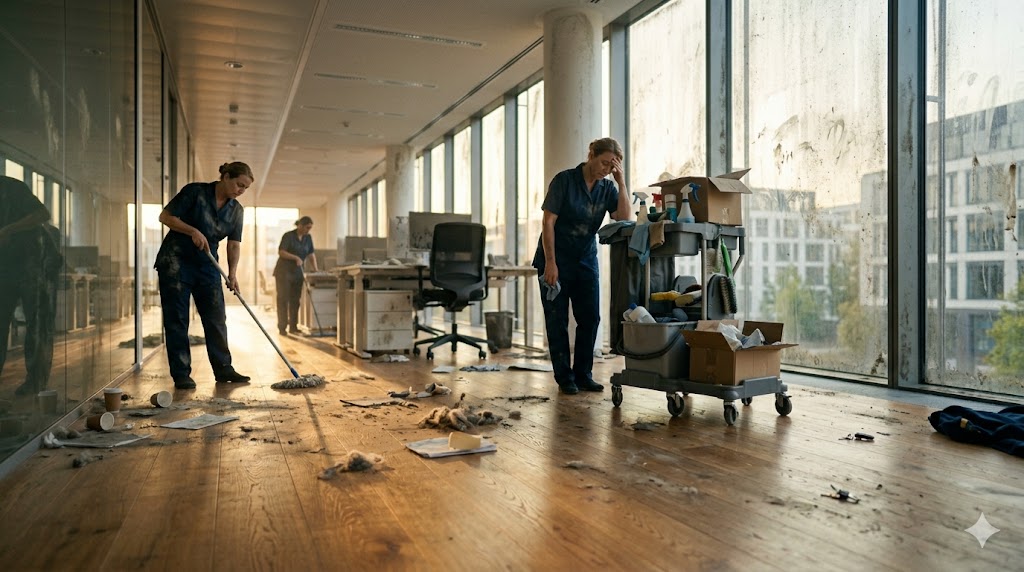
The True Cost of a Dirty Home: Why Professional Cleaning Home Services Are No Longer a Luxury
Picture this: It is Friday evening. You have wrapped up a grueling 50-hour work week, dealing with clients, traffic, and endless digital noise. You unlock your front door, ready to kick off your shoes and melt into a relaxing weekend, only to be greeted by a layer of dust on the coffee table, a stack of dishes in the sink, and a bathroom that looks like a crime scene.
Suddenly, your home doesn’t feel like a sanctuary. It feels like a second job.
In our fast-paced modern lives, time has become our most expensive asset.
Investing in professional cleaning home services is no longer just about outsourcing chores; it is an upgrade to your mental health, your physical well-being, and your lifestyle.
1. Micro-Dust and Micro-Management: The Anatomy of a Clean Home
Most people view cleaning as a visual task. If the floor looks swept and the countertops are wiped down, the house is considered "clean." Unfortunately, the real threats to your home environment are completely invisible.
The Indoor Air Quality Crisis
According to environmental health studies, indoor air can be two to five times more polluted than outdoor air. Every time you walk across a carpet, sit on a fabric couch, or close your windows to turn on the air conditioning, you trap a microscopic cocktail of:
Dead skin cells (the primary component of household dust)
Pet dander and dried saliva micro-particles
Dust mite feces
Pollen tracked in from the soles of your shoes
When you perform standard retail cleaning—using a regular broom or a low-powered retail vacuum—you often end up just redistributing these particles. The broom flings fine dust into the air, where it settles right back down onto your furniture and into your lungs over the next few hours.
Professional cleaning home services solve this through industrial-grade equipment. True professionals rely on high-efficiency particulate air (HEPA) filtration vacuums. These machines trap particles as small as 0.3 microns, ensuring that once dust enters the machine, it never returns to your living space.
2. Deep Cleaning vs. Routine Maintenance: What Do You Get?
When you look into booking a service, you will generally be faced with two choices: a routine upkeep package or a deep sanitization package. Understanding the technical boundaries between these two options ensures you get exactly what your space requires.
| Cleaning Attribute | Routine Maintenance Clean | Deep Sanitization Clean |
| Primary Objective | Surface-level upkeep and dust prevention | Resetting the property to a baseline hygienic state |
| Frequency | Weekly, bi-weekly, or semi-monthly | 2 to 4 times per year (or during a move) |
| Kitchen Scope | Wiping exterior appliances, countertops, sink | Interior oven degreasing, behind-fridge vacuuming, cabinet interior wipe-down |
| Bathroom Scope | Sanitizing toilet, mirror, sink surface, quick floor mop | Mineral deposit removal from glass, tile grout scrubbing, drain disinfection |
| Living Areas | Superficial dusting, general vacuuming of walkways | Moving light furniture, baseboard detailing, window track clearing |
The Myth of the "Quick Wipe"
Many homeowners believe they can tackle deep cleaning over a single weekend. However, removing years of accumulated hard water stains from glass shower panels or degreasing kitchen cabinets requires specific chemical knowledge.
Professional teams understand the pH scale of cleaning agents. They know that alkaline grease requires an acidic counter-agent, while mineral buildup on chrome fixtures needs a specific chelating agent to break down without ruining the metallic finish. Using the wrong off-the-shelf supermarket spray can permanently etch natural stone countertops or strip the sealant off hardwood floors.
3. The Psychological Return on Investment (ROI)
Let's move away from the chemical side of cleaning and talk about human psychology. Clutter and dirt are not just physical inconveniences; they are psychological weights.
A famous study published in The Journal of Neuroscience used magnetic resonance imaging (MRI) to track how the human brain responds to environmental disorganization.
Increased levels of cortisol (the primary stress hormone)
Subtle, ongoing mental fatigue
Decreased focus and cognitive performance, especially for children trying to study or remote professionals working from home
By delegating these tasks to a dedicated service provider, you strip away that environmental friction. Coming home to a space where the air smells neutral, the lines in the carpet are perfectly straight, and the surfaces are smooth allows your nervous system to fully transition into a resting state. You aren't paying someone to clean; you are paying to reclaim your mental clarity.
4. How to Screen a Cleaning Provider
The home service sector has grown rapidly, bringing both premium operators and fly-by-night operations into the market. Because you are opening your private living space to external workers, you must be incredibly selective during your hiring process.
Before booking any cleaning home services, make sure you run through this essential screening process:
Ask About the Insurance Framework
This is the single biggest differentiator between a casual gig-worker and a premium service company. If an uninsured individual slips on your wet bathroom tile while cleaning, you could be legally and financially liable for their medical bills as the property owner. Always demand verification that the company holds valid third-party liability insurance to cover both worker injuries and accidental damage to your property.
Inquire About Personnel Vetting
Does the agency use unverified daily wage laborers, or do they employ full-time staff who have undergone rigorous background checks and criminal record verifications? Your home holds your most valuable possessions and your loved ones; never compromise on the security profile of the people entering it.
Clarify the Tool and Chemical Policy
Some budget services require you to supply the vacuum cleaner, the mop, and all the liquids. Premium providers arrive in a dedicated vehicle fully stocked with their own industrial equipment, microfiber cloths color-coded by room type (ensuring the cloth used on the toilet isn't used on your dining table), and specialized solutions.
5. The Environmental Impact: Green Cleaning Protocols
As we look at modern home care trends, sustainability has moved to the absolute forefront. Traditional heavy-duty cleaning products often rely on volatile organic compounds (VOCs).
When choosing a service provider, look for companies that explicitly offer green cleaning options. These modern formulations use plant-derived enzymes and natural acids (like citric acid and distilled vinegar bases) to break down dirt without leaving dangerous chemical residues behind. They achieve the exact same level of sanitization without turning your home into a chemical laboratory.
6. Frequently Asked Questions
Here are the answers to the most common questions homeowners ask before onboarding a professional home care team:
Q1: Do I need to stay at home while the cleaning crew is working?
Answer: No, you do not need to be present. In fact, many clients prefer to schedule their sessions during work hours so they can leave a messy house in the morning and return to a pristine environment in the evening. If it is your first time using a specific provider, it is recommended to be there for the first 15 minutes to hand over keys, give a brief tour, and highlight any delicate areas or specific house rules.
Q2: How often should I schedule professional cleaning home services?
Answer: For most busy households, a bi-weekly (every two weeks) routine service is the sweet spot for maintaining a steady baseline of hygiene. If you have multiple pets or young children, a weekly schedule may be more appropriate. For deep, comprehensive cleans that cover window tracks, appliance interiors, and detailed tile scrubdowns, booking a session once every quarter (three months) is standard.
Q3: What should I do to prepare my home before the cleaners arrive?
Answer: The general rule of thumb is to "declutter so they can clean." Professional cleaners charge for their time and specialized skills.
Q4: How are rates calculated for professional home cleaning?
Answer: Pricing models typically fall into two categories:
By the Hour: You pay a fixed rate per cleaner, per hour. This is common for customized or variable tasks.
Flat Rate based on Square Footage/Configuration: The company charges a set price based on the number of bedrooms and bathrooms in your layout. This model is ideal because it gives you a predictable cost regardless of how long the team takes to achieve their quality standard.
Moving Forward: Take Back Your Weekends
Your home is a reflection of your state of mind. When it is chaotic and dirty, it acts as a constant, silent stressor. By partnering with a verified, professional cleaning service, you aren't simply outsourcing an administrative chore—you are actively investing in a healthier living environment, protecting your family from hidden allergens, and buying back your free time.
Stop spending your Saturdays with a scrub brush. Reach out to a certified local provider today, set up a customized plan that fits your schedule, and experience the transformative feeling of a professionally maintained home.